Moisture damage is one of the most common and costly problems homeowners face in Massachusetts. With heavy rainfall, snow, humidity, and seasonal temperature fluctuations, homes throughout the state are constantly exposed to conditions that can damage siding, trim, and other exterior surfaces. Fortunately, one of the most effective ways to protect your home is through professional exterior painting.
High-quality exterior paint does more than improve curb appeal—it creates a protective barrier that helps prevent water intrusion, wood rot, mold growth, and costly repairs. Investing in professional exterior painting can significantly extend the life of your home’s exterior while preserving its appearance and value.
Fortunately, one of the most effective ways to protect your home is through professional exterior painting services.
Why Exterior Painting Services MA Are Essential for Protecting Homes from Moisture
Massachusetts weather can be particularly harsh on residential properties. Rain, snow, ice, and humidity can gradually penetrate unprotected surfaces, causing damage that often goes unnoticed until major repairs are required.
Exterior paint serves as the first line of defense against moisture. When properly applied, it seals vulnerable surfaces and helps prevent water from reaching the underlying materials. This protective barrier is especially important for homes with wood siding, trim, and other exterior features that are susceptible to moisture-related deterioration.
Homeowners who invest in regular painting maintenance often avoid the expensive repairs associated with long-term water damage.
Many homeowners invest in residential painting services as part of their long-term home maintenance strategy.
How Exterior Painting Services MA Help Prevent Wood Rot and Structural Damage
Wood rot occurs when moisture repeatedly penetrates wooden surfaces. Over time, this can weaken siding, trim, fascia boards, and other structural components of a home.
Professional exterior painting helps prevent wood rot by:
- Sealing exposed wood surfaces
- Protecting against rain and humidity
- Reducing moisture absorption
- Preventing cracks that allow water intrusion
- Extending the lifespan of exterior materials
Without adequate protection, even small amounts of moisture can lead to significant structural issues that require costly repairs or replacement.
Signs Moisture Is Damaging Your Home’s Exterior
Many homeowners don’t realize moisture damage is occurring until visible signs begin to appear. Regular inspections can help identify problems before they become severe.
Common warning signs include:
- Peeling or bubbling paint
- Cracked caulking around windows and doors
- Soft or rotting wood
- Mold or mildew growth
- Water stains on exterior surfaces
- Fading or deteriorating paint
These issues often indicate that moisture is finding its way beneath the paint surface and affecting the materials underneath.
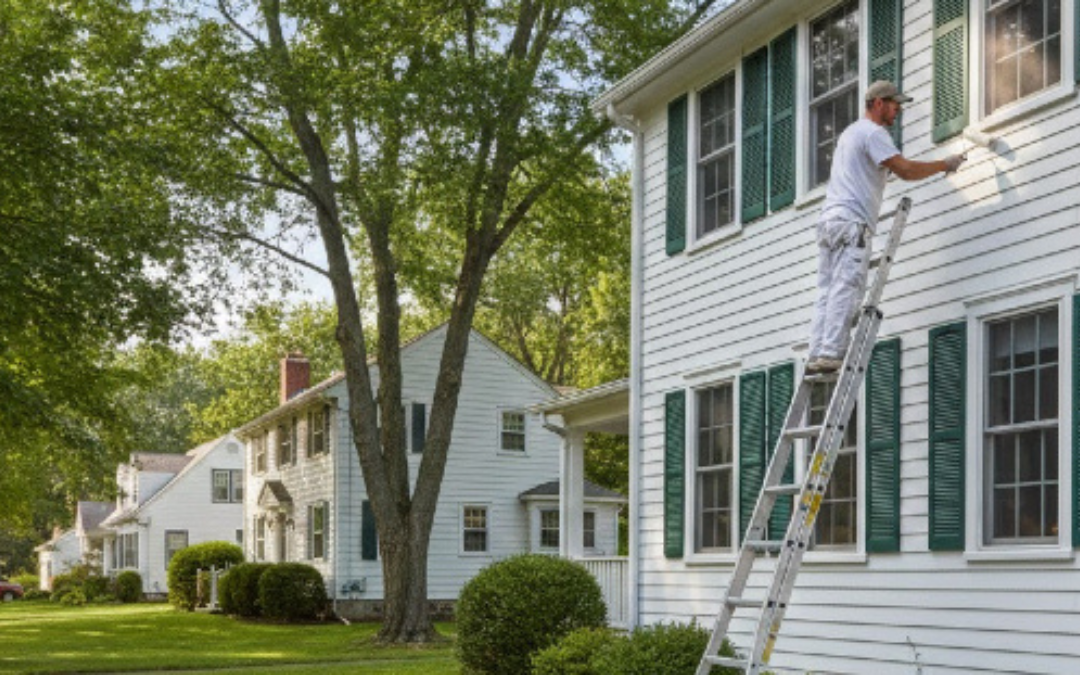
Investing in professional exterior house painting helps homeowners protect siding, trim, and other surfaces from Massachusetts weather.
Exterior Painting Services MA Improve Weather Resistance
Massachusetts homes are exposed to a wide range of weather conditions throughout the year. From freezing winter temperatures to humid summer days, exterior surfaces must withstand constant environmental stress.
Modern exterior paints are designed with advanced formulations that improve weather resistance and moisture protection. High-quality coatings help repel water, resist mildew growth, and maintain their protective properties for years.
Combined with proper surface preparation and application techniques, professional exterior painting provides long-term protection against the challenges of New England weather.
Why Surface Preparation Matters Before Exterior Painting
Even the best paint products cannot perform effectively if surfaces are not prepared correctly. Surface preparation is one of the most important steps in preventing moisture-related issues.
Professional painters typically:
- Clean exterior surfaces
- Remove loose or peeling paint
- Repair damaged areas
- Seal cracks and gaps
- Apply appropriate primers when needed
This process helps create a strong bond between the paint and the surface, improving durability and moisture resistance.
Why Homeowners Trust Painters Etcetera, Massachusetts
At Painters Etcetera, Massachusetts, we understand the unique challenges local homeowners face when it comes to protecting their properties from moisture damage. Our team provides professional exterior painting solutions designed specifically for Massachusetts weather conditions.
We use high-quality materials, proven preparation methods, and expert application techniques to help homeowners safeguard their investment while improving curb appeal. Whether your home needs preventative maintenance or a complete exterior repaint, we are committed to delivering long-lasting results.
Final Thoughts
Moisture damage can lead to expensive repairs, reduced property value, and long-term structural problems if left unaddressed. Professional exterior painting provides a critical layer of protection that helps prevent water intrusion, wood rot, and surface deterioration.
By investing in professional exterior painting services, homeowners can improve the appearance of their property while protecting it from the harsh weather conditions common throughout Massachusetts. Regular maintenance and timely repainting can save thousands of dollars in future repair costs while keeping your home looking its best for years to come.